
Welcome
|
|
Our vision is that every person with a chromosome 18 abnormality will have an autonomous and healthy life. Our mission is to provide families affected by chromosome 18 abnormalities with comprehensive medical and educational information with a focus on treatment options.
Goals
- To be the international medical and educational resource for the families of individuals with chromosome 18 abnormalities.
- To perform and facilitate both clinical and basic research relating to the syndromes of chromosome 18.
- To devise treatments to help these individuals overcome the effects of their chromosome abnormality.
Approach
1. Understand the phenotype
Employ the most sophisticated medical technologies and assessment tools to define as precisely as possible the components of the phenotype. (e.g., instead of global IQ assessment, evaluate more detailed subsets of features such as executive function, spatial reasoning and temporal processing need to be assessed). This alone may lead to treatment options. For example, knowing that the short stature is caused by growth hormone deficiency leads to an immediate treatment option.
2. Characterize the genotype
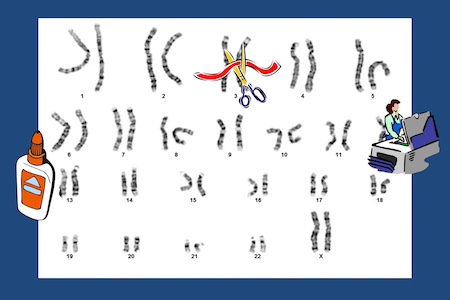
Define exactly which genes are not diploid in each individual with a chromosome 18 abnormality. This will utilize the latest information on the genome and will employ cutting-edge molecular genetic and molecular cytogenetic techniques.
3. Correlate phenotype with genotype
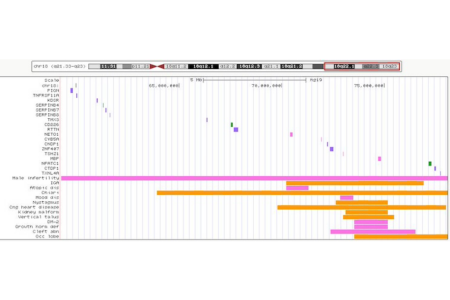
By identifying which genes are associated with which components of the phenotype a better understanding of the underlying biology will be gained. This can then be used to inform the search for the most effect treatments. This process is facilitated by a secure custom-designed database for the storage and retrieval of the study participant’s medical records as well as study-generated phenotype and genotype information.
Significance
- This Center will be the prototype for the development of other centers across the country (and indeed the world) focused on other chromosome abnormalities.
- Since chromosomal abnormalities are responsible for half of the cases of mental retardation, these Centers will be key in ameliorating the personal, social and economic impact of these conditions.
Please note:
The Chromosome 18 Registry and the Chromosome 18 Clinical Research Center (this website) are separate entities and maintain separate lists of members and/or participants. The Registry does not share names with the Research Center and vise versa. Inclusion in one does not imply or obligate inclusion in the other. Therefore, if you want Registry membership information, you must contact the Registry. If you want research participation information, you must contact the Research Center.